


As temperatures drop, starting an engine becomes more demanding for the vehicle’s battery. This is not simply because the battery delivers less energy in cold weather. The electrochemical processes inside the battery change, its internal resistance increases, and the engine requires more effort to crank the crankshaft.
As a result, a battery that starts an engine without difficulty at +10 °C may operate much closer to its available starting capacity at −15 °C or −20 °C.
This article explains what happens inside a lead-acid battery as the temperature decreases and why temperature has such a significant effect on engine starting.
Electrochemical Processes Inside a Battery
A conventional automotive lead-acid battery converts chemical energy into electrical energy through electrochemical reactions between the active material of the plates and the electrolyte.
During discharge, lead at the negative plate reacts to form lead sulfate. At the positive plate, lead dioxide is also converted into lead sulfate. The electrolyte participates in these processes and enables ion transfer inside the battery.
To start an engine, the battery must deliver a very high current within a short period of time. Unlike supplying power to a low-current electrical device over an extended period, operating a starter motor creates a short-duration, high-current load.
As temperature decreases, the rate of electrochemical reactions slows down. Ion mobility in the electrolyte is reduced, and the processes responsible for charge transfer between the electrodes and electrolyte become less efficient.
As a result, the battery’s ability to deliver a high current quickly decreases.

What Happens to Internal Resistance?
One of the key parameters affecting high-current performance is the battery’s internal resistance.
When the starter motor is engaged, hundreds of amperes may flow through the battery. Part of the battery voltage is lost internally as a result of this current flow. The relationship can be simplified as:
- U = E − I × R
where:
- U — voltage at the battery terminals under load;
- E — electromotive force;
- I — load current;
- R — internal resistance of the battery.
As temperature decreases, the internal resistance of the battery increases. Therefore, at the same load current, the voltage drop inside the battery becomes greater.
This is important for the starter motor. The greater the voltage drop under load, the less electrical power is available to the starter.
However, the actual behavior of a battery depends not only on temperature. Its design, state of charge, condition of the active material, age and degree of wear also have a significant influence.
Why Is Cranking Current Important?
One of the key specifications of an automotive battery is its cold cranking current. This parameter characterizes the battery’s ability to deliver a high current for a short period at low temperature under defined test conditions.
Cold cranking current and rated capacity are two different characteristics.
Capacity indicates the amount of electrical charge a battery can deliver under a specified test regime.
Cold cranking current characterizes the battery’s ability to provide a high current during a short starting event.
Therefore, a battery with a certain rated capacity will not necessarily perform identically at different temperatures and load conditions. For engine starting, the battery’s ability to maintain sufficient current at low temperature is particularly important.
This is why battery selection should take into account not only the Ah rating, but also the specified cold cranking current and other technical parameters of the particular model.
Why Does a Cold Engine Require More Power?
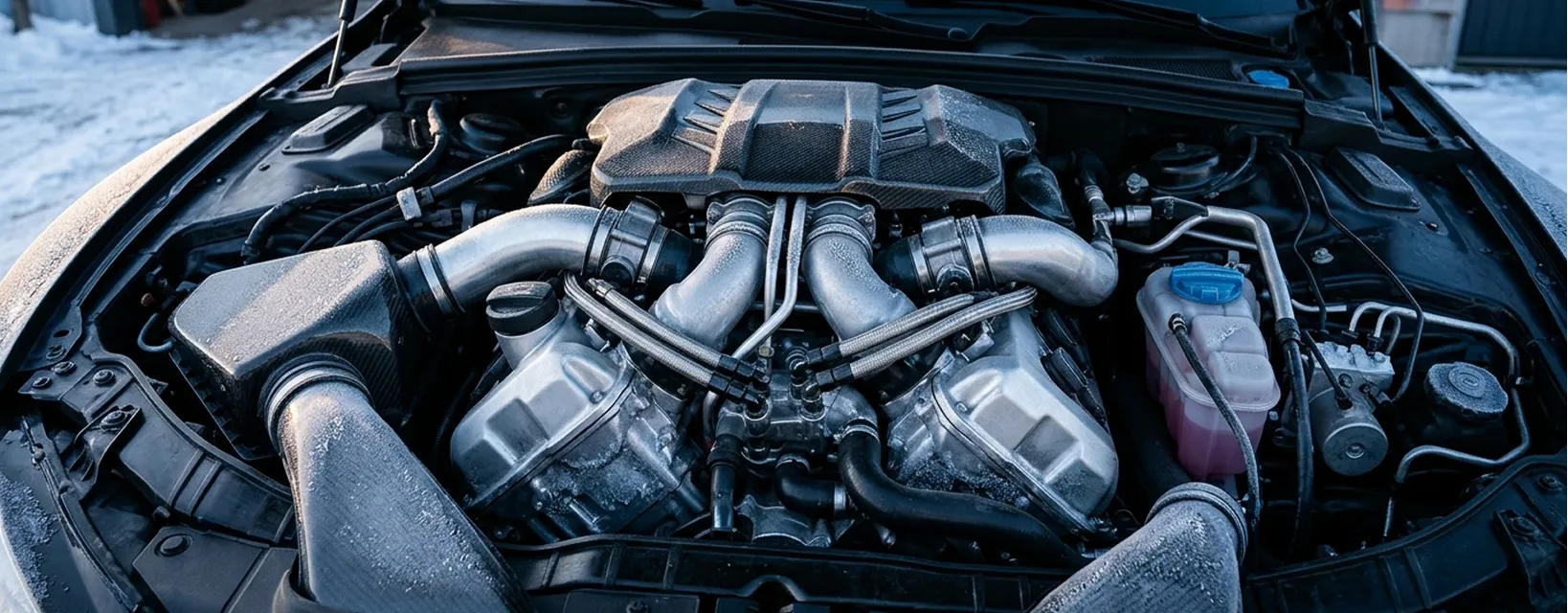
At the same time as the battery’s operating conditions become more difficult, the load on the starter motor increases.
As temperature decreases, engine oil becomes more viscous. This creates greater resistance to the movement of engine components. The starter motor therefore needs to produce more torque to turn the crankshaft.
Additional resistance occurs in bearings, drive mechanisms and other engine components whose operating characteristics are also affected by temperature.
As a result, two factors occur simultaneously during a cold start:
the battery has more difficulty delivering a high current, while the starter requires more energy to crank the engine.
This combination explains why the vehicle’s starting system experiences significantly greater load in winter.
Why Does Lower Temperature Affect Available Capacity?
The rated capacity of a battery is determined under a specific test procedure and should not be considered a constant value under all operating conditions.
At low temperatures, electrochemical reactions slow down, meaning that the battery cannot utilize its stored charge with the same efficiency as at higher temperatures.
The effect becomes particularly noticeable under high-current loads. The greater the load, the more pronounced the influence of internal resistance and the limited rate of electrochemical reactions.
Therefore, when evaluating battery performance in winter, temperature, state of charge and load conditions should all be considered.
State of Charge Before the Cold Season
Temperature is not the only factor determining whether a battery can start an engine.
The battery’s state of charge is also important. A partially discharged battery has less available energy for starting the engine. If a battery is repeatedly operated in a state of undercharge, its operating characteristics may deteriorate over time.
One possible cause of undercharging is the vehicle’s operating pattern. For example, during frequent short trips, the energy consumed during engine starting may not be fully restored by the alternator.
In winter, this effect can be increased by the use of electrical equipment such as the heating system, heated windows and seats, lighting, fans and other electrical consumers.
If the amount of energy supplied by the alternator is insufficient to compensate for the energy consumed, the battery’s state of charge gradually decreases.
Why Are Short Trips Particularly Relevant in Winter?
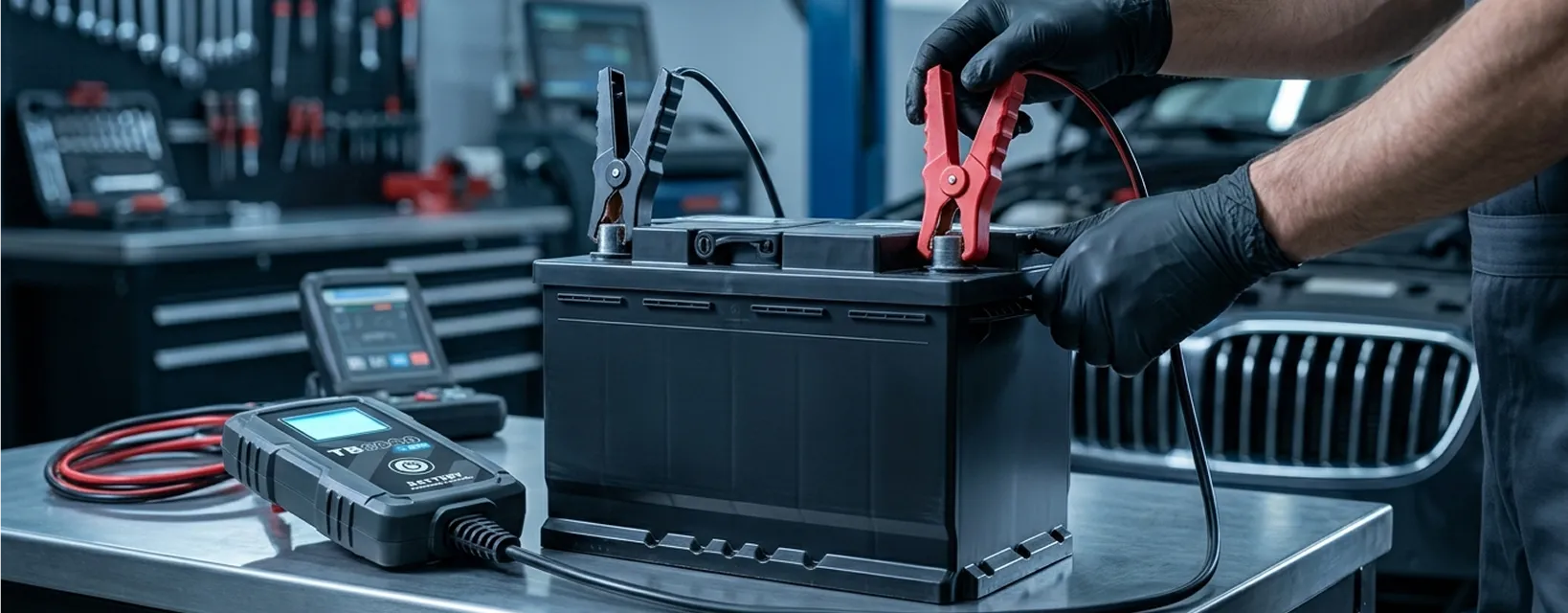
Each engine start consumes a certain amount of electrical energy from the battery. After the engine starts, the alternator begins to restore this energy.
During a longer trip, the charging system has more time to replenish the charge. During short trips, the operating period may be insufficient for full recovery.
If this pattern is repeated regularly, the battery may remain partially charged for extended periods.
This becomes particularly important in winter because the next engine start takes place at a lower temperature and with additional demand from the vehicle’s electrical systems.
Therefore, evaluating battery condition requires consideration not only of its age and rated specifications, but also of the vehicle’s actual operating conditions.
How Does Battery Aging Affect Winter Starting?
Battery characteristics change over time. The aging process is affected by the number of charge and discharge cycles, depth of discharge, operating temperature, charging conditions and the specific battery design.
Changes may occur in the active material of the plates, corrosion of current-carrying components, structural changes in the active material and sulfation under certain operating conditions.
As a result, internal resistance may increase and the battery’s ability to deliver high current may decrease.
At moderate temperatures, a reduction in performance may remain almost unnoticed. Cold weather increases the load on the starting system, so the available performance margin of an aged or partially degraded battery becomes significantly smaller.
This is why starting problems often appear when the first sustained cold weather arrives, even though the battery’s performance may have been gradually declining for some time.

The Influence of Battery Design
Battery performance at low temperatures is influenced by its construction. Important factors include plate characteristics, the composition and structure of the active material, separator design, electrolyte properties, electrode surface area and manufacturing technology.
Different battery technologies are designed for different operating conditions and use different construction solutions.
The WEZER range includes batteries with different designs and specifications, so their operating characteristics should be considered for each specific model. For example, the WEZER range includes batteries using Ca/Ca technology as well as selected EFB models. However, the use of a particular technology does not eliminate the influence of temperature, state of charge and operating conditions on battery performance.
For each battery, the manufacturer’s specified capacity, cold cranking current and other technical parameters should be used as the primary reference.
Why Does Resting Voltage Not Tell the Whole Story?
A common mistake is to evaluate battery condition solely by measuring voltage at the terminals when the battery is at rest.
This measurement can provide useful information about the state of charge, but it does not fully indicate the battery’s ability to withstand a high-current load.
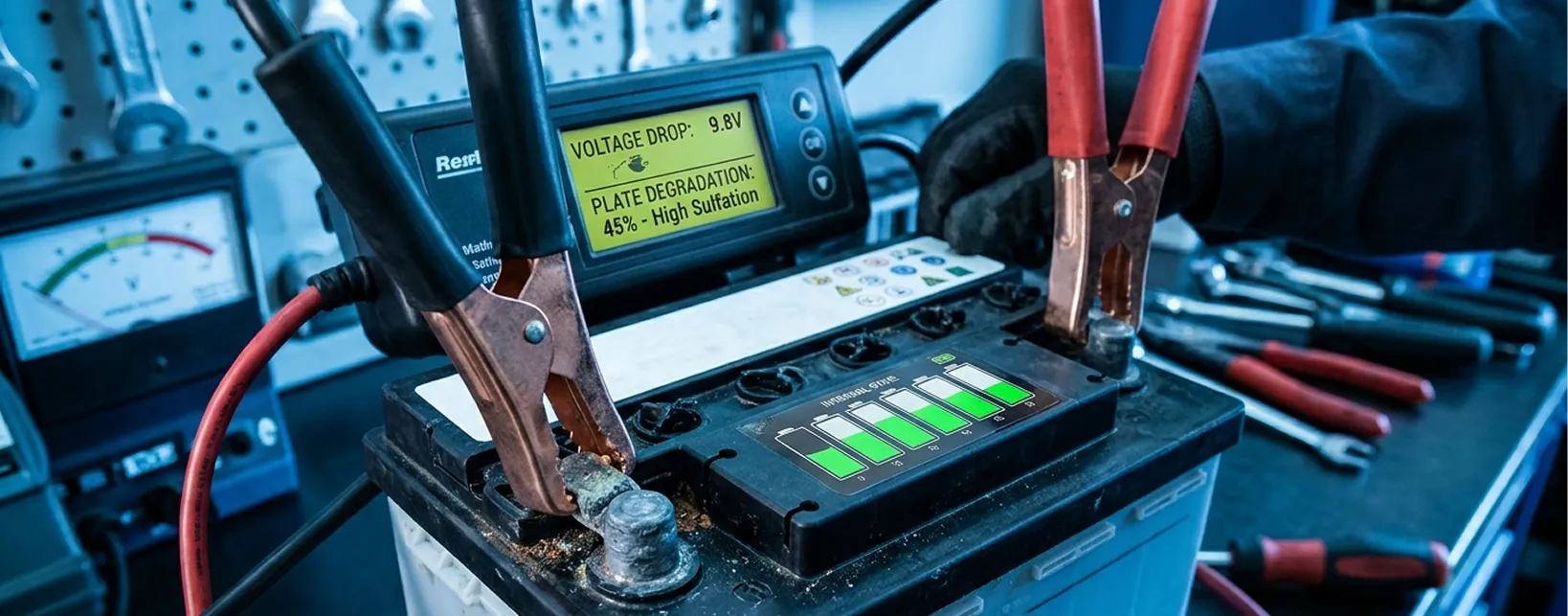
For example, a battery may show a normal resting voltage but experience a significant voltage drop when the starter motor is engaged.
Therefore, battery diagnostics should consider not only resting voltage but also battery behavior under load, the condition of the charging system and the actual starting symptoms.
For a more accurate assessment, load testers and specialized battery diagnostic equipment can be used.
Why Does Terminal Condition Matter?
A very high current flows through the battery connections when the engine is being started. Therefore, the condition of the terminals and high-current connections directly affects the quality of the electrical contact.
Oxidation, contamination or insufficiently tightened connections increase the resistance of the electrical circuit.
Under a small load, this may be almost unnoticeable. During starter operation, however, even a relatively small additional resistance can result in a significant voltage drop.
Therefore, when diagnosing starting problems, it is not sufficient to check the battery alone. The terminals, cables, electrical connections and starter motor should also be inspected.
How to Prepare the Battery for the Cold Season
Before winter operation, several key parameters should be checked:
- battery state of charge;
- resting voltage;
- condition of the terminals and high-current connections;
- battery mounting security;
- alternator and charging system operation;
- signs of physical damage to the battery case;
- battery performance during engine starting.
If the starter motor begins to crank the engine noticeably more slowly than before, or if starting takes longer than usual, the battery and starting system should be diagnosed.
Particular attention should be paid to the battery before the winter season if the vehicle is mainly used for short trips or if the battery has already been in service for a significant period of time.

What Happens to a Battery in Severe Frost?
As the temperature falls further, the effects described above become more pronounced. Electrochemical reactions slow down further, internal resistance increases, and the available starting power decreases.
The actual degree of change depends on the battery’s design and current condition.
For a properly functioning battery, a reduction in starting performance at low temperatures is a normal physical effect. However, if the battery already has increased internal resistance, remains chronically undercharged or shows signs of active-material degradation, cold weather can make these problems much more noticeable.
This is why the first severe frosts often become a practical test for the entire vehicle starting system.
Conclusion
Reduced battery performance in cold weather is the result of a combination of electrochemical and mechanical factors.
As temperature decreases, electrochemical reactions slow down and the battery’s internal resistance increases. This limits its ability to deliver a high current quickly. At the same time, cold engine oil increases resistance to engine cranking, which means that the starter requires more energy.
Other important factors include the battery’s state of charge, degree of wear, design characteristics, condition of the electrical connections and the vehicle’s operating pattern.
Winter battery performance is therefore determined by more than a single specification. Even a battery with an appropriate rated capacity and cold cranking current can behave differently depending on temperature, state of charge and load conditions.
WEZER batteries, like other lead-acid automotive batteries, should be operated in accordance with their specified technical characteristics and the intended application of each model. Before the cold season begins, it is advisable to check the battery and the vehicle’s charging system in order to identify any reduction in operating performance in advance and reduce the risk of starting problems at low temperatures.