


Degradation is a natural and inevitable process in any battery’s life cycle. However, the speed and nature of this process in Wezer batteries are largely determined by operating conditions, maintenance quality, and electrical modes. Capacity loss and performance decline result from a combination of electrochemical, thermal, and mechanical changes.
Key Mechanisms of Degradation
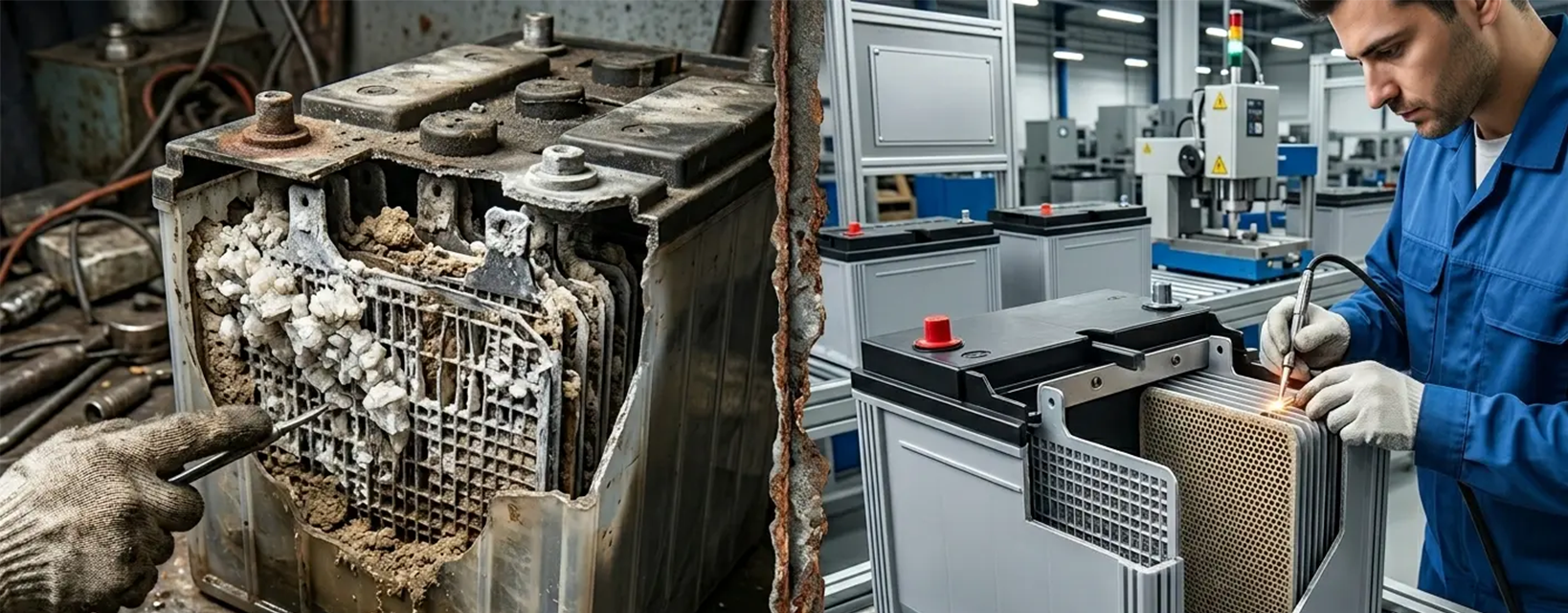
- Plate Sulfation: During discharge, lead sulfate forms on the active material. While normal charging reverses this, long periods of discharge or systematic undercharging cause sulfate crystals to enlarge and become insoluble. These crystals block the active areas of the plates, reducing capacity and increasing internal resistance.
- Corrosion of Positive Gratings: Electrochemical metal oxidation is accelerated by high charging voltages and elevated temperatures. Over time, corrosion weakens the lattice structure and reduces electrical conductivity, which can lead to plate deformation and compromised internal geometry.
- Destruction of Active Mass: Multiple charge-discharge cycles subject plate material to volume and structural changes. This causes particles of the active substance to shed and lose contact with the grid. This is most intense during deep discharges and in high-vibration environments, directly reducing capacity and potentially causing internal short circuits.
External Factors and Operational Impact
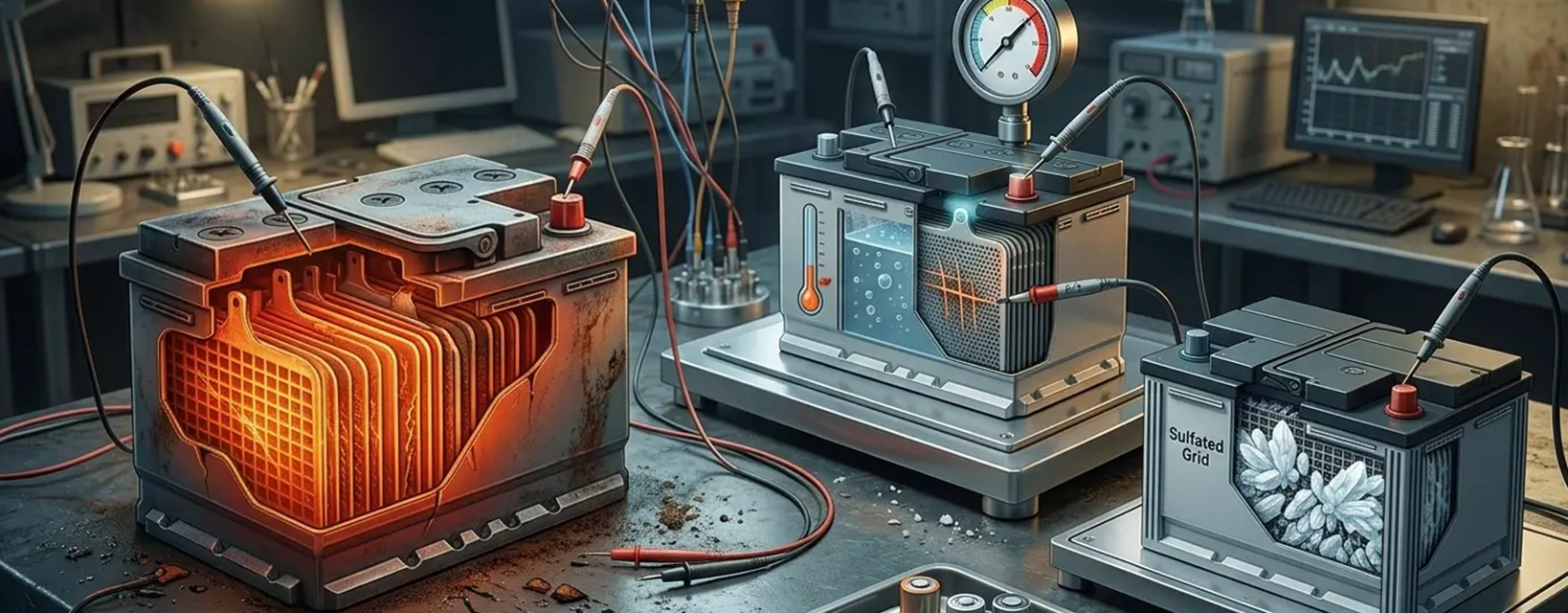
- Temperature Effects: High temperatures accelerate chemical reactions, self-discharge, and corrosion, potentially shortening service life several times over. Conversely, low temperatures temporarily reduce available capacity and current output; if handled improperly, they can contribute to irreversible internal changes.
- Charging Modes:
- Overcharging: Leads to water electrolysis, causing electrolyte loss and increased internal pressure. In sealed Wezer batteries, this can disrupt the valve system and gas recombination efficiency.
- Undercharging: Creates a cycle of persistent sulfation and reduced available capacity, accelerating the aging process.
- Self-Discharge: Caused by internal current leaks and chemical instability, self-discharge occurs even without a load. Long-term storage without recharging leads to a deep-discharge state, fostering irreversible degradation. This is a critical factor for backup power systems and irregularly used vehicles.
Conclusion
The degradation of Wezer batteries is a complex, multifactorial process involving chemical, thermal, and mechanical structural changes. Operational experience confirms that maintaining correct charging modes, controlling temperature, and preventing deep discharges are the most effective ways to slow down aging and ensure a stable, maximum service life.