


ExMET (Expanded Metal) is an innovative method for the production of electrode plates used in Wezer batteries, based on a complex metal belt expansion process that includes rolling, perforation, and mechanical stretching steps. This technological process makes it possible to obtain electrode plates with high mechanical properties, uniform porosity and increased electrical conductivity, which improves the electrochemical characteristics of Wezer batteries, especially in conditions of intensive operating cycles.
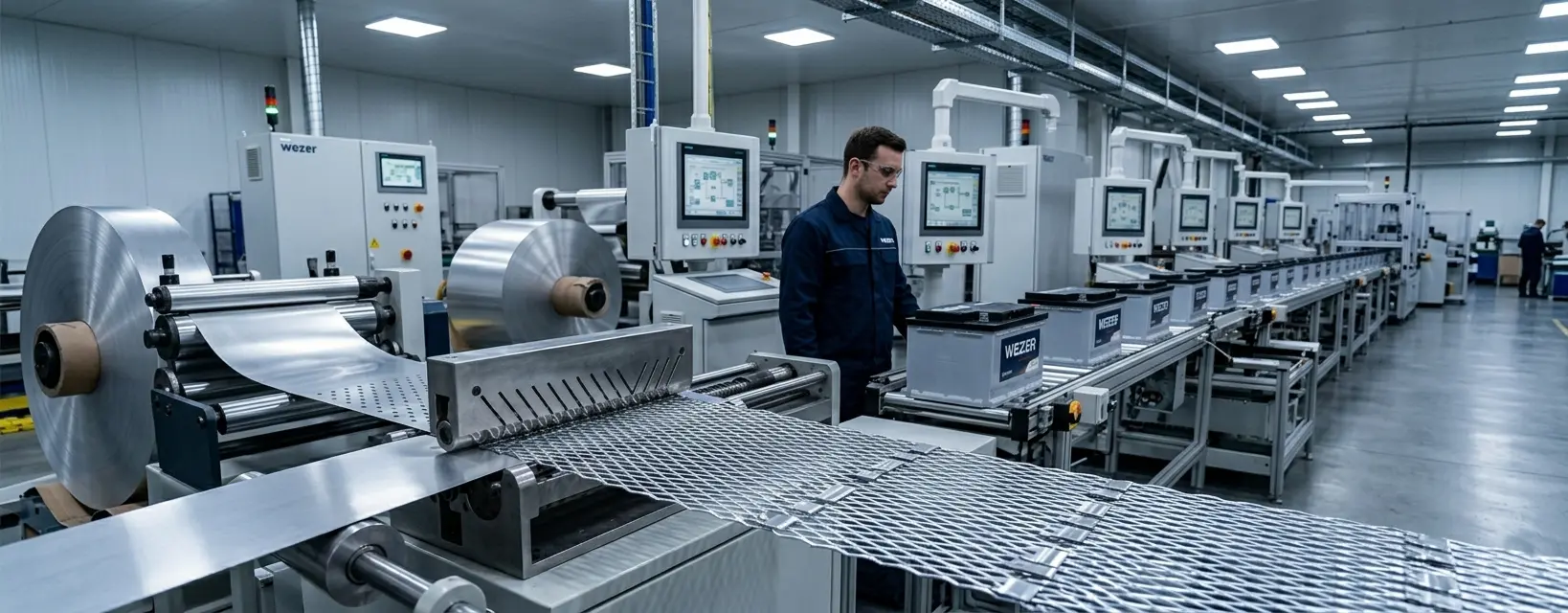
The electrode plates in Wezer batteries are the main metal components involved in chemical reactions. The positive electrode is made of lead (Pb) sheet coated with lead dioxide (Pbo₂), and the negative electrode is made of pure lead or with alloy additives, which ensures electromechanical stability and ductility. During operation, these electrodes enter into chemical reactions of reproduction of active substances and transmission of electric current, and their structural properties significantly affect the efficiency of the battery and its durability.
The process of producing electrodes using ExMET technology begins with the manufacture of an initial metal strip made of high-purity lead or its alloys with a high degree of structural uniformity and minimal impurities. The tape goes through a rolling stage, during which a predetermined thickness is achieved, which ensures optimal mechanical strength and electrical conductivity.
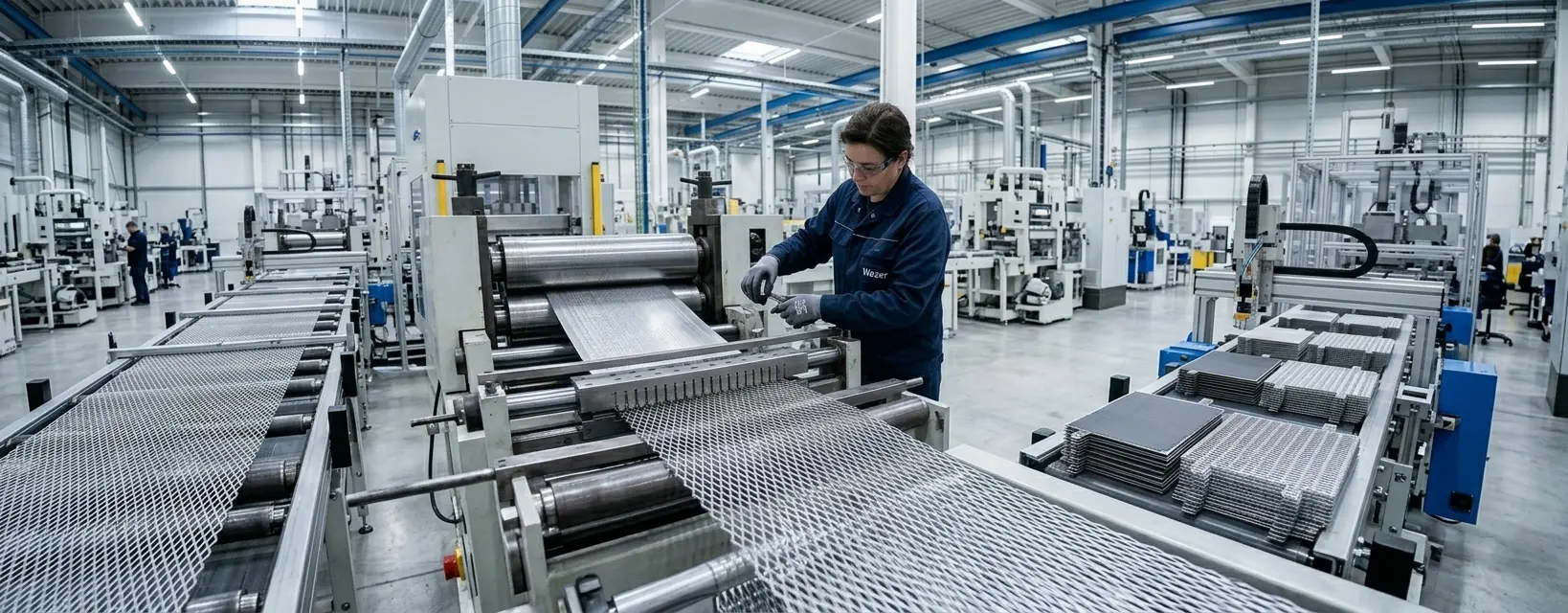
After that, the perforation stage takes place, during which regular holes are applied to the rolled sheet using mechanical tools, laser devices or waterjet systems in strict accordance with the calculated density and shape (round, squares, hexagons or cells). This step regulates the porosity and pore distribution inside the electrode plate, which ensures an even distribution of active substances, increases the availability of the electrolyte and promotes a more efficient electrochemical reaction.
Next, the perforated tape is subjected to mechanical stretching in the longitudinal direction using specialized stretching machines. In the process of stretching, plastic deformation of the metal occurs, increasing the surface and creating a mesh or cellular structure. This increases the contact area between the electrode and the electrolyte, which significantly increases the activity and speed of the reaction.
Stretching also contributes to improved bonding of the active layers to the metal base, reduces the risk of cracks, cracking and peeling of the active layers under cyclic loads, and the high mechanical strength of the expanded metal ensures the resistance of the electrodes to mechanical influences, vibrations and extreme operating conditions.
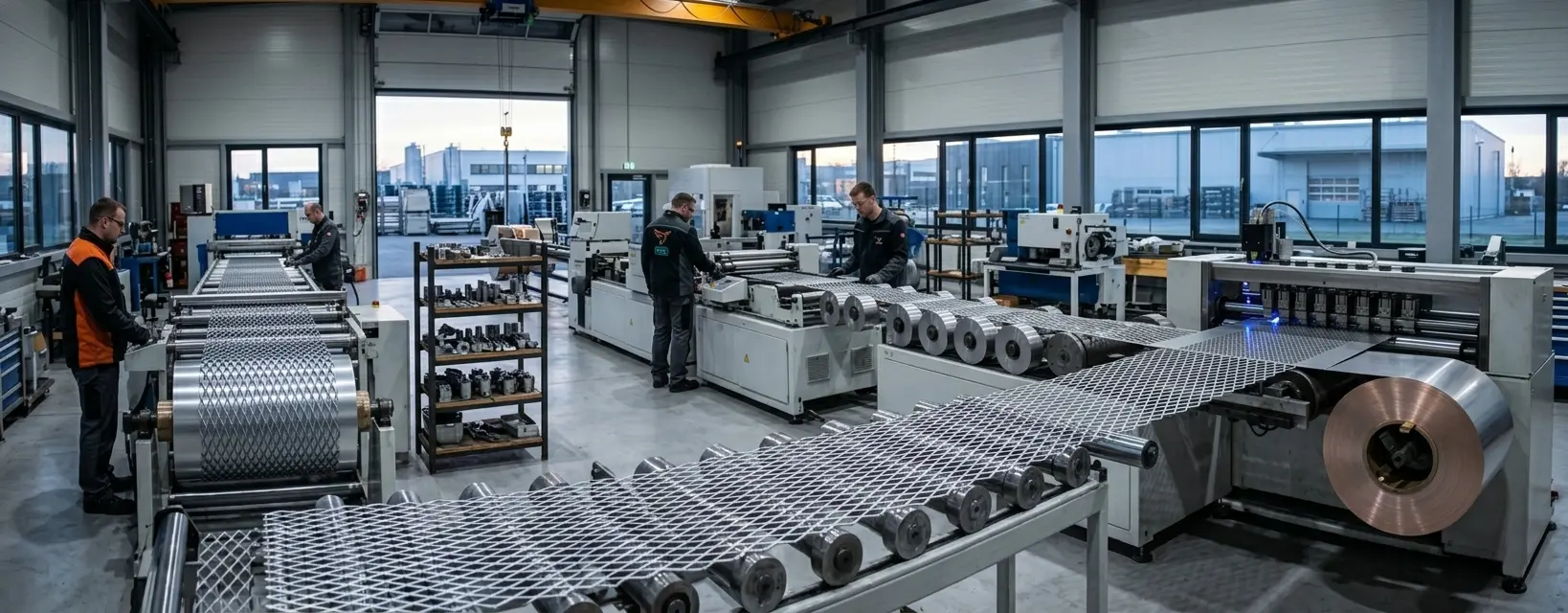
The advantages of using ExMET technology in Wezer are evident in the stable performance of the electrode plates, their increased durability and efficiency. Due to the increased surface area, the electrodated plates demonstrate higher electrochemical activity and the possibility of more efficient use of active substances.
The regular porosity and cellular structure make it possible to evenly distribute the active substance, ensuring uniformity of the reaction and reducing the risks of local degradation foci.
This method also helps to reduce production costs by using raw materials more efficiently and automating processing processes, which allows for the mass production of high-quality electrode plates for Wezer batteries.
The result is a significant increase in the service life of Wezer batteries, an increase in their current and resource capacity, as well as improved performance.